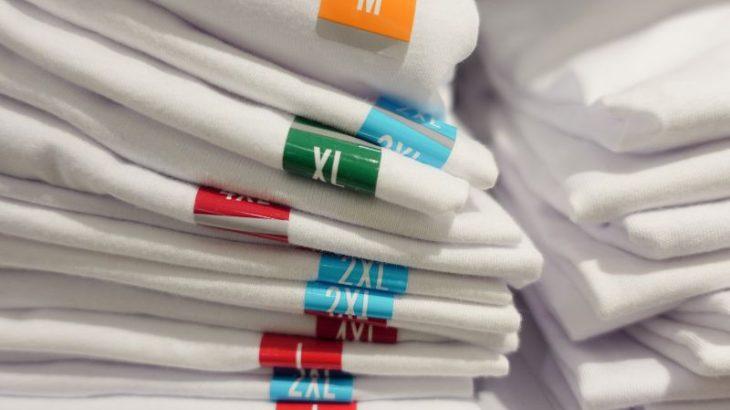
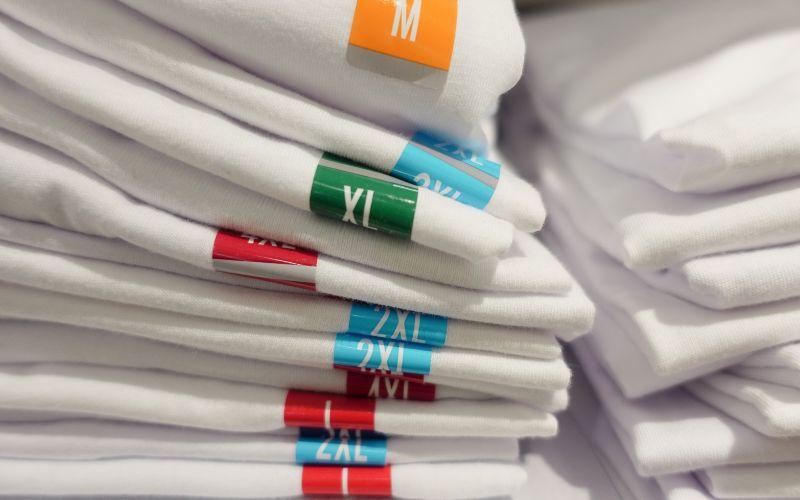
If you are left with unused custom-branded clothing, you have wasted stock, wasted money, and frustrated staff and customers. The question every business, charity, or event organiser faces is this: how many T-shirts to order in each size? It’s not always possible to gather every individual’s measurements beforehand, and this is especially true of online stores as well as larger groups, teams, or events. At A.M. Custom Clothing, we have years of experience guiding businesses through bulk and bespoke orders, and we have plenty of our own data to draw from and help inform your decisions.
Page contents
Why size planning saves money, time, and stress
What influences how many shirts to order in each size?
Size ratio guidelines with A.M. Custom Clothing insights
Practical strategies to avoid overstock
Why size planning saves money, time, and stress
Size planning may not seem like a big issue until you are left with stacks of unwanted stock. Overstock can directly impact your budget and your environmental impact.
Every T-shirt that goes unsold or unused is money you won’t get back. For charities, that’s funds lost. Retailers, its stock is tying up valuable cash flow. For businesses, it’s a wasted uniform budget.
Excess stock doesn’t just sit in a cupboard; it often ends up discarded, which undermines sustainability commitments. At A.M. Custom Clothing, we’re committed to helping our customers order responsibly, aligning with both financial and environmental goals.
The bottom line? Size planning is one of the easiest ways you can save money and reduce waste.
What influences how many shirts to order in each size?
Your demographics influence the number of shirts needed in each size. Age, gender, and location can all influence sizing trends.
- Event size and type can influence your size needs. A run of T-shirts for staff uniforms may require more large and extra-large sizes, whereas merchandise for a youth event might skew towards small and medium sizes.
- Garment style is another factor to consider. Fitted shirts usually skew towards smaller sizes, while unisex or relaxed fits tend to balance around medium and large.
- Location and region. Sizing expectations vary between countries (a UK large isn’t always the same as a US large).
- Inclusivity considerations. Even if sizes are less standard, they’re important to include so no one feels left out.
Can you gather any further data? One-off event orders benefit from gathering size data in advance, while ongoing workwear supplies tend to follow predictable patterns.
The more you know about who will be wearing your garments, the more accurately you can order. If you are asking this question, our team at A.M. Custom Clothing can add real value. We guide clients through these considerations, helping them order clothing and merchandise accurately rather than relying on guesswork.
Size ratio guidelines with A.M. Custom Clothing insights
All orders are bespoke, but there are helpful patterns to look at. Unisex T-shirt orders typically find the majority of wearers falling into the medium and large sizes. Gendered orders shift the curve slightly, often increasing demand for smaller or larger ends of the spectrum.
To give you a better feel for how others split their sizing, here is a break down of how many of each size were ordered across nearly 1,000 orders:
These figures highlight that medium and large sizes dominate, with small and XL following close behind. X-small and larger sizes make up a smaller proportion, but they’re still essential to include. No one wants to be left out because their size wasn’t considered.
For most unisex bulk orders, a safe starting ratio is to allocate the majority to medium and large, then scale downwards and upwards with a smaller spread. However, the best approach is always to match the ratio to your specific audience.
Practical strategies to avoid overstock
We have brainstormed with our team and come up with a few practical ways to refine your order and avoid dreaded overstock:
- Pre-order and conduct size surveys: Collecting sizes ahead of time is the most accurate way to order. For events and merch drops, talk to us about setting up pre-order systems or surveys to capture this data.
- Build in a buffer for standard sizes: Medium and large sizes are consistently the most popular. Adding a small buffer in these sizes reduces the risk of running out.
- Consider flexible reordering options: We print-on-demand and have no minimum order quantity, so you don’t need to commit to massive upfront stock. Order what you need, then reorder quickly if demand exceeds expectations.
- Lean on industry experience: Use our expertise! We’ve guided thousands of organisations through size planning and can advise you based on your sector, audience, and goals.
By combining data with these strategies, you’ll minimise waste, control costs, and ensure the right fit for everyone.
FAQ’s
Will the quantity of stock I order affect the size mix?
Yes, we recommend different approaches depending on order size. For smaller orders (under 50 T-shirts), you might not need to include every size. It’s still wise to cover the most common range (S–XL). For larger orders (100+), scale accordingly to our ratios and include sizes XS and 2XL and above to ensure inclusivity.
Do shirt styles (fitted vs unisex) impact sizing?
Shirt styles do affect sizing. From experience, fitted styles often require more sizes at the smaller end, while unisex or relaxed fits tend to skew towards medium and large. Always check whether you’re ordering a fitted garment, as this can significantly change demand. Our team will advise you on size ratios based on the garment style you choose.
Should I adjust sizes for different age groups or events?
Yes. We’ve seen youth events needing more small and medium sizes, while workplace uniforms often lean towards large and XL. At A.M. Custom Clothing, we can help you analyse your audience and recommend the right breakdown, whether it’s for a festival, charity run, or staff uniforms.
What about regional or country-specific sizing differences?
Sizing expectations vary by region. For example, a UK large may be closer to a US medium. If your audience is international, review the supplier’s sizing charts and adjust accordingly.
How do I handle requests for very large or very small sizes?
Extra-large and small sizes are important for inclusivity. If your order is small, include at least one or two of these sizes. For bulk orders, scale them proportionally to your overall quantity.
What’s the best way to avoid running out of popular sizes mid-event?
Order a small buffer of mediums and larges. If you’re hosting an event, have a sign-up or distribution system that prioritises the fair allocation of sizes, rather than handing them out on a first-come, first-served basis.
How can I track and improve sizing accuracy over time?
Keep a record of leftover stock after each order, broken down by size. Over time, you’ll see patterns (for example, always short on large, always leftover smalls) and can refine your ratios with real-life data.
How should I plan if I don’t know the audience at all?
Use a “safe ratio” based on industry averages. Add a buffer to medium and large if you expect uncertainty.
Getting your size mix right isn’t just about avoiding waste; it’s about making sure every person who receives one of your shirts feels included and valued. By following a T-shirt size ratio guide and learning from real-world data, you can order smarter, save money, and reduce your environmental impact.
At A.M. Custom Clothing, we take pride in helping businesses, charities, and retailers order more responsibly. From organic cotton T-shirts to Fairtrade-certified uniforms, we combine industry-leading printing and embroidery with a strong commitment to sustainability.
Contact us today, and we can help you order the correct quantities and sizes for your next project.
No minimum order quantities.
Industry-leading print quality.
Fast UK dispatch.
No equipment or technical know-how needed.